
Marketing & SEO
How to Get Free Leads: The Contractor's Organic Playbook
Bought leads stop the day the card stops. Organic leads compound. Here is the order to build them in, what each one is worth, and a 90-day plan you can run yourself between jobs.
By the HandyBro team13 min read
The short answer
Free leads for contractors come from five places: a complete and active Google Business Profile, a handful of web pages about the specific services and towns you work in, referral relationships with trades and businesses adjacent to your work, visibility at the job sites you are already on, and past clients you contact again. They cost time instead of money, take about three months to start producing, and keep producing after you stop working on them.
Attention is only half of it. Organic inquiries arrive at night, from people comparing three contractors, and they are won by whoever puts a real price in front of them first. That is what Handy Bro handles — an intake link gathers the client's photos and details, the app builds an itemized estimate with labor at your rates and live material prices, and you send a branded proposal from your phone the same evening.
Organic is not free, it is prepaid
The honest framing first. Paid leads cost money and arrive immediately. Organic leads cost hours and arrive later — sometimes much later — but the hours you put in this spring keep paying next spring, and the year after that.
That difference in timing is the whole reason most contractors never build organic channels. You do the work in a slow month, see nothing, decide it does not work, and go back to buying leads. Then the next slow month arrives and you are still renting.
The other difference is client quality. A homeowner who found you in a map search and read six reviews arrives half-sold. A homeowner referred by their plumber arrives fully sold. A homeowner who submitted a form on a marketplace has your name and three others in front of them, and price is the easiest way to choose between strangers. Same trade, same quality of work, completely different conversation about money.
Budget two hours a week. Not a Saturday marathon in February that never repeats — two hours, every week, in the order below. The sequence matters, because the first item feeds all the others.
Google Business Profile, done properly
If you do exactly one thing from this article, do this one. For local trades, the map results sit above the regular search results and take the majority of the clicks, and the listing is free. Most contractor profiles are half-built: a name, a phone number, four photos from 2021, and two reviews.
- 1
Pick the primary category the way a customer would search
Your primary category carries more ranking weight than anything else you control. General contractor, handyman, deck builder, bathroom remodeler — they are not interchangeable. Choose the one that matches the work you most want, add secondary categories for the rest, and revisit it if your mix changes.
- 2
Set a service area, not a storefront, if clients do not come to you
Service-area businesses hide the street address and list the towns they cover. Listing a home address you do not work out of creates verification problems later. Keep the service area to places you would genuinely drive, because absurd radii dilute rather than expand you.
- 3
Fill in every field, including the ones that feel pointless
Hours, service list with descriptions, license number, payment methods, opening date, and the attributes. Profiles get shown for the specific service someone searched, and services you never listed cannot be matched.
- 4
Add real photos on a schedule
Ten photos at signup then silence reads as abandoned. A few current job photos every month — with the truck, the crew, and finished work — signals an active business to both people and the ranking system.
- 5
Answer the questions section yourself
Anyone can post an answer to a question on your profile, and often the answer that sticks is wrong. Seed the common ones yourself: free estimates or not, service radius, minimum job size, licensed and insured, emergency availability.
- 6
Reply to every review, including the good ones
A short, specific reply on a five-star review reads better than a template, and a calm reply on a bad one is read by every future customer. Steady, recent reviews matter more than a big number from three years ago.
- 7
Use messaging only if you will actually answer
Turning on messaging and leaving people waiting is worse than not offering it. If you cannot reply within the hour during the workday, leave it off and let the phone be the phone.
Reviews deserve their own discipline rather than a hopeful afterthought, including how to ask without being awkward and what to do about an unfair one. That is covered in our guide to referrals, reviews, and repeat customers.
The five web pages that actually pull work
You do not need a large website. You need a small one that answers the exact question somebody typed. Five pages, written like a person explaining the work, beat a twenty-page site of stock photos and phrases like “quality craftsmanship since 2012.”
| Page | Why it earns its place |
|---|---|
| One page per service | Somebody searching for deck repair should land on a page about deck repair, not a homepage that lists eleven services. One page, one job type, with what it includes, what affects the price, and photos of three you have done. |
| One page per town you serve | Genuinely different content per town: jobs completed there, permit quirks, the neighborhoods you know. Ten thin pages with the town name swapped in is the oldest trick in local SEO and it stopped working long ago. |
| A project gallery with captions | Before, during, and after, with a sentence on what the problem was and what it took. This is the page clients actually read before calling, and it is the one that quietly sets your price expectation. |
| An honest pricing explainer | Not a price list. A page describing how you price — what is flat rate, what is hourly, what a trip fee covers, what makes a job cost more. It pre-qualifies bargain hunters and builds trust with everyone else. |
| A contact page that collects photos | A form with name, address, description, and a photo upload beats a phone number alone, because half of your inquiries arrive at nine at night from someone who will not call a stranger. |
Write them the way you would explain the job standing in a client's kitchen. Search engines and AI assistants now both reward pages that answer a specific question in plain language, and homeowners were always going to prefer that. Keep the phone number visible on every page, make sure the site works on a phone, and put your service area in the footer.
Job photos are the marketing
Nothing you write about your work will do as much as a set of photos of the work. Homeowners cannot evaluate framing or a solder joint, but they can absolutely tell whether your finished bathrooms look like the one they want and whether your sites look organized.
Build a habit rather than a project. Before you start, take a wide shot of the space. During the ugly part, take one more. When you finish and clean up, take three from the same angles as the first. Thirty seconds a job, and within a season you have a portfolio that most of your competition does not have.
The captions do the selling. “Kitchen remodel” says nothing. “Homeowner had a slow leak under the sink for two years; the floor was gone under the cabinets. Replaced subfloor, reset base cabinets, new LVP through the kitchen and hall — five days” tells the next person with a soft floor that you have done their job before. Ask permission before posting interiors, keep addresses out of it, and never post a client's mess in a way that would embarrass them.
Trade partners: the most underused channel in contracting
Ranking takes months and reviews accumulate slowly, but a good partner relationship can start producing work in a fortnight. Every trade constantly meets customers who need something adjacent that they do not do, and most of those referrals currently go to whoever the customer finds on their own.
| Partner | What flows between you |
|---|---|
| Plumbers and electricians | They open walls and cannot close them; you patch drywall, tile, and paint. You find failing supply lines and panels you should not touch. |
| Realtors and property managers | Pre-listing punch lists, turnover repairs between tenants, and inspection-report items on a deadline. They need someone reliable more than they need someone cheap. |
| Interior designers and kitchen showrooms | They sell the vision and need hands to install it. Referrals from them arrive with the budget conversation already handled. |
| Roofers, HVAC, and specialty trades | Everything adjacent to their work that they will not do — ceiling repair after a leak, framing a chase, carpentry around new equipment. |
| Other contractors in your own trade | The jobs they are too booked, too far away, or too big-ticket to take. Being the person who answers when a competitor is overloaded is a surprisingly durable lead source. |
| Suppliers and lumberyard pro desks | Counter staff get asked for recommendations constantly. Be memorable, pay on time, and be the name they say. |
Three rules make these relationships stick. Give first — send them a job before you ask for one, even a small one. Treat their referral better than your own leads, because they are lending you a client relationship they spent years building. And close the loop: tell them what happened with the person they sent, whether you won it or not. That last one is the difference between one referral and a standing arrangement, and almost nobody does it.
Keep it simple and above board. A card in their van and a name they trust is usually the whole mechanism. If money changes hands for referrals, check your state's licensing rules first, and never let a fee push a client toward work they do not need.
Neighborhood groups, without getting thrown out
Nextdoor, local Facebook groups, and town subreddits contain a steady stream of “can anyone recommend a good...” posts. Those threads are one of the last places where a stranger will hire on a neighbor's word without collecting three bids.
The etiquette is unforgiving and worth learning. Do not post advertisements; most groups delete them and some ban you. Do not reply “DM me” to every request thread, which reads as trawling. Do answer the questions where somebody is trying to figure out whether they have a real problem — is this crack structural, does this need a permit, is this a repair or a replacement — with a genuine answer and no pitch. People remember who was helpful, and the recommendations follow.
When you are recommended, respond publicly, briefly, and with thanks rather than a sales paragraph. And when a client mentions they are in one of these groups, that is the moment to ask them to say so the next time somebody asks.
Working the block you are already on
The cheapest job you will ever get is the one next door to the job you are already doing. The drive is paid for, the client has watched you work for a week, and the trust problem is solved before you speak.
Make it deliberate. A yard sign goes up on day one, not day four. The truck is lettered, because it parks in a different neighborhood every week. On the first morning, put a short note in the four nearest mailboxes: what you are doing, roughly how long, what hours the noise will happen, and a number to call if the crew blocks somebody in. That note gets you goodwill from people who would otherwise resent the trailer, and it gets read.
Then let the site do the rest. Clean at the end of every day, keep the material stacked, do not play music at seven in the morning. Neighbors judge whether they would hire you entirely by what your site looks like at five in the afternoon, and they are usually right to.
A 90-day organic plan
In order, because each step makes the next one work better. Two hours a week is enough.
- 1
Weeks 1-2: claim and complete the profile
Claim and verify the Google Business Profile, set the primary category and service area, fill every field, list your services with descriptions, and upload twenty real photos. Add your license and insurance details. This is the single highest-return unpaid hour in contracting.
- 2
Weeks 2-4: build the review habit
Text a review link to every client at the moment the job is signed off — not a week later. Then go back through the last two years of finished jobs and ask the ten clients who were happiest. Aim for a steady trickle rather than a burst, and reply to each one.
- 3
Weeks 3-6: publish the pages that answer real searches
Write one page for each of your top three services and one for your main town. Real sentences about real jobs, with photos. Link them from the homepage and from your profile. Three good pages outperform twenty thin ones.
- 4
Weeks 4-8: start five partner conversations
Pick five trades or businesses that touch your work, meet them in person, and make the first referral yourself. Give before you ask. Follow up with the outcome of anything they send you, because reporting back is what turns one referral into a habit.
- 5
Weeks 6-10: make every job site visible
Yard sign up on day one, truck lettered, site kept clean, and a card or a short note to the four closest neighbors telling them what is happening and when the noise ends. Neighbor work is the cheapest job you will ever get because the drive is already paid for.
- 6
Weeks 8-12: reactivate the list you already have
Pull every past client into one list with the job, the date, and the address. Send a short seasonal message offering the thing that makes sense now. Old clients convert several times better than strangers and cost nothing to reach.
At day ninety you will have a profile that ranks somewhere it did not before, a review stream, a handful of pages doing quiet work, five relationships, and a client list. None of that disappears if you get busy for a month, which is precisely the argument for building it.
Turning organic inquiries into signed jobs
All of the above produces conversations. Conversations become work only if a credible price shows up quickly, and organic inquiries are especially unforgiving here: they land in the evening, from someone who found two other contractors in the same search.
Handy Bro is an AI cost estimator built for handymen, remodelers, and small contractors, on the App Store and Google Play. It is the difference between “I will get you a price next week” and a proposal in their inbox before they go to bed.
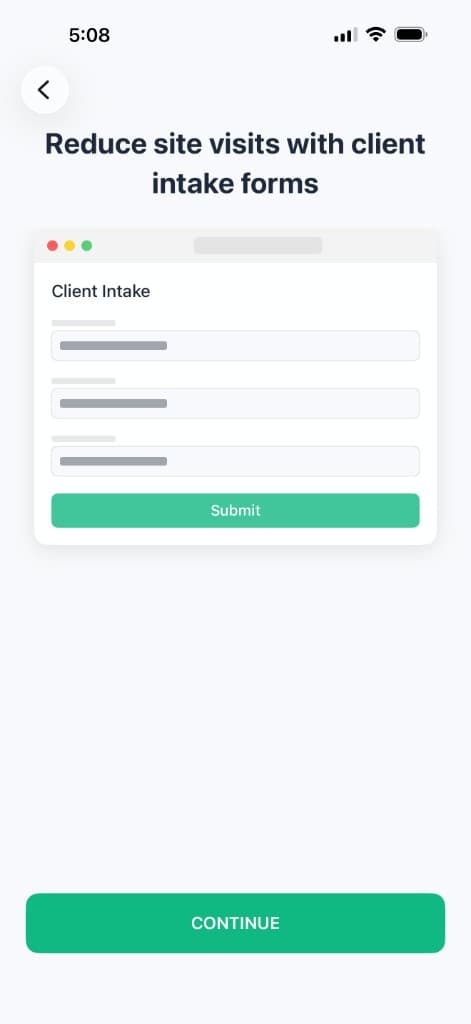
One link instead of phone tag
Put the intake link on your profile, your contact page, and in your first reply. Clients upload photos, describe the job, and answer AI-generated questions about access and condition while you are still on another site.
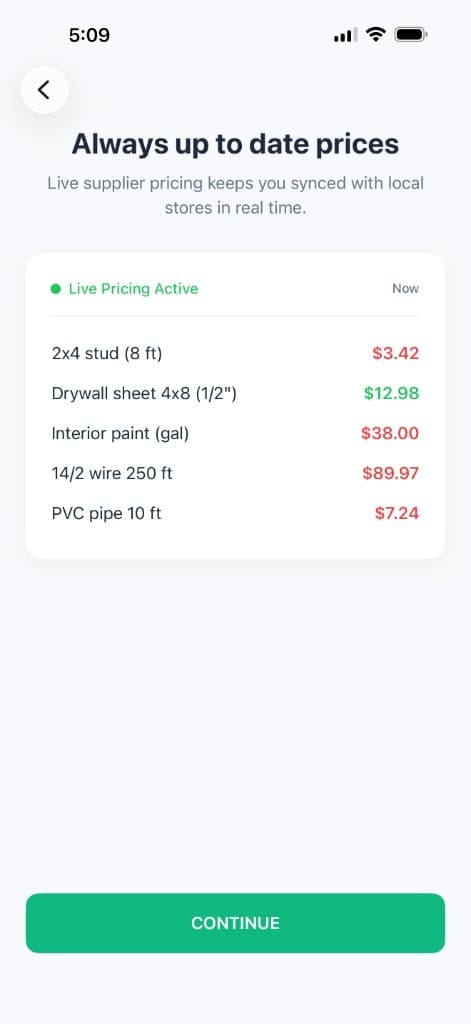
A real number, not a range
Labor at your own rates, materials priced from live Home Depot and Lowe's data, broken out task by task. Edit any line, then send it as a branded proposal the client approves online — which is also the paperwork that makes a one-truck operation look like a company.
Frequently asked questions
- How do I get free leads as a contractor?
- The reliable free channels are a complete, active Google Business Profile; a small set of web pages about specific services and towns; referral relationships with trades and businesses that touch your work; visibility at the job site through signage and neighbor outreach; and periodic reactivation of past clients. None of them produce work in week one. Together they typically produce a steady flow within three to six months, and unlike paid leads they keep producing after you stop working on them.
- What is the fastest free lead source?
- Past clients and current job-site neighbors. Both are people who already know you exist or can see your work in progress, so there is no trust to build from scratch. A short message to your last two years of clients offering the seasonal service that makes sense usually produces work the same week. A yard sign and a note to the four nearest houses often produces a job before the current one finishes.
- How do I rank higher on Google Maps as a contractor?
- Local map rankings mostly come down to relevance, distance, and prominence. You control relevance by choosing the right primary category and listing your actual services, prominence through a steady stream of recent reviews, current photos, and a website that matches your profile details. Distance you cannot control, which is why a service-area business rarely dominates the whole metro. Consistency matters: same business name, address, and phone number everywhere they appear online.
- Do I need to blog or post on social media to get leads?
- No. For most contractors, posting job photos with a sentence of context on your profile and one platform is enough, and a blog is optional. What actually converts is proof — before-and-after photos, a clean site, and reviews that describe the job. If you enjoy posting, short videos of real work outperform anything polished. If you do not, put those hours into partner relationships instead, which have a much shorter path to a signed job.
- How long do organic leads take to work?
- Expect roughly ninety days before you see a trickle and six to twelve months before the channel carries a meaningful share of your schedule. Google Business Profile is the fastest of the group; service pages are slower because they need to be indexed and to earn some trust. This delay is why almost everyone abandons organic work, and also why it stays available to whoever is patient enough to keep going.
- Is it worth being on Nextdoor and Facebook groups?
- Yes, if you treat them as a community rather than a billboard. Recommendation threads in local groups are one of the last places where a stranger will take a neighbor's word and call you without shopping around. The etiquette is strict: do not self-promote in threads, do not argue about pricing in public, and do answer questions helpfully when nobody is asking for business. Contractors who get named in those threads usually got there by being useful first.
- Should I stop buying leads once organic starts working?
- Reduce, do not eliminate. Paid channels are the tap you open when a job falls through or the calendar looks thin in three weeks, and that flexibility is worth keeping even when it is expensive per job. The healthy end state is organic covering your baseline schedule and paid filling the gaps. Judge the shift with a scorecard rather than a feeling — our guide to construction lead channels has the cost-per-booked-job math.
- What is the single biggest organic mistake contractors make?
- Getting the attention and then losing it at the reply. Free leads arrive at odd hours from people who are comparing you against two others, and they get the same silent treatment that bought leads get. A profile that ranks and a phone that goes to voicemail for six hours is an expensive way to advertise for your competitors. Speed of response is part of the marketing, not something that happens after it.
- How does Handy Bro help with organic leads?
- It closes the gap between an inquiry and a real price. You send one intake link that collects the client's photos, address, and job details, and the app turns the description into an itemized estimate with labor at your rates and materials priced from live Home Depot and Lowe's data. The result goes out as a branded proposal the client approves on their phone. Organic inquiries tend to arrive in the evening, and being the one who has a real quote in front of them by morning is what converts them.
- Do I need to pay an SEO agency?
- Not to start. Everything in this article can be done by the owner in a couple of hours a week, and the parts that matter most — the profile, the photos, the reviews, the partner relationships — are things an agency cannot do for you anyway. Consider paid help once you are already ranking and want to compete for higher-value searches across multiple towns. Be wary of anyone selling guaranteed rankings or a monthly retainer with no deliverable you can point at.
The bottom line
Organic lead generation is unglamorous and slow, and that is exactly why it stays available. Every contractor in your town could claim their profile, photograph their jobs, and call five trades this month. Almost none of them will.
Start with the profile this week, because it is two hours and it compounds from the day it is finished. Add a review request to your end-of-job routine so it happens without you deciding each time. Then keep the two hours a week going through the busy season, when it feels least necessary — that is when the work you do now shows up in the calendar you will have in six months.